

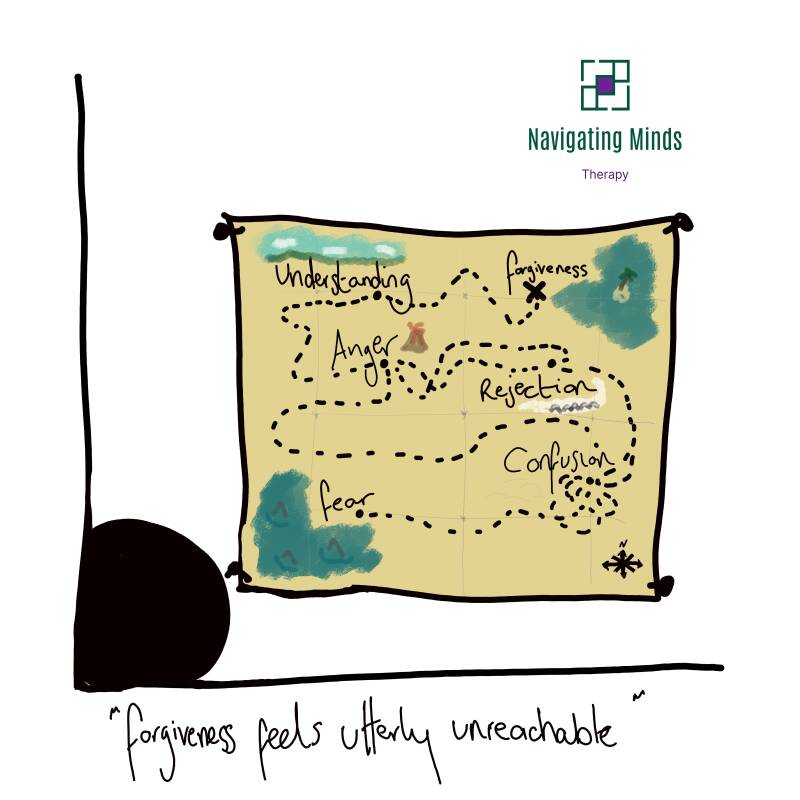
Forgiveness should be the goal... right?
It's often said that forgiveness is a great tonic for the person doing the forgiving. That it can soften something inside you and offer you relief from the pain you have experienced... but is that the whole picture?
You can see the idea of it. You understand why people talk about it. You know, somewhere within you, that you’re capable of compassion and clarity. And still… nothing shifts.
It’s a strange kind of stuckness: the desire to move forward is there and so is the awareness of what might help. But forgiveness, whether toward someone else or toward yourself, feels blocked by something you can’t quite name yet. Like there is an invisible barrier that grows heavier the longer the hurt remains unaddressed. Before you know it, the pain overtakes everything, and now you’re not just struggling, you’re completely unable to reach the place you’re told you “should” be.
For many people, especially those who’ve experienced deep hurt, betrayal, trauma, or long‑standing patterns of self‑criticism, this is incredibly common. It’s not stubbornness. It’s not a lack of maturity. It’s a real, lived emotional barrier that can make forgiveness feel impossible, even when you genuinely want it.
If you’ve noticed this happening again and again, it might be worth exploring what’s underneath it. Sometimes the barrier is protective, a part of you trying to keep you safe from being hurt again. Sometimes it’s grief. Sometimes it’s an anger that hasn’t been allowed the space to be acknowledged or felt fully. Sometimes it’s the simple truth that forgiveness requires more than time; it requires understanding before it can be processed and the hurt truly healed.
Therapy offers a space to gently unpack what’s going on, without judgement, without pressure and without the expectation that you should already be able to forgive. It’s possible to explore what’s keeping forgiveness out of reach and begin building ways to move toward it at your own pace - or even exploring what it might feel like to not offer forgiveness but to stop at understanding, rather than forcing yourself into a place you’re not ready for.
Either way, you don’t have to navigate this alone.